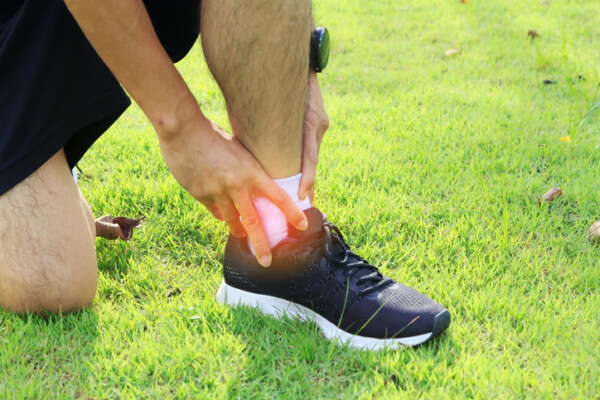
Anterior Ankle Impingement, also known as “Footballer’s Ankle,” is a condition where a bony or soft tissue growth occurs at the front of the ankle joint. This typically occurs between the lower end of the tibia (shin bone) and the talus, one of the main bones in the ankle.
Compression in this area can decrease ankle movement and cause pain and swelling, especially when lifting your foot upward, such as during walking or running. It may develop after an impact injury or from repeated stress over time, leading to continuous irritation and stiffness in the joint.
What does Ankle Impingement “Footballer’s Ankle” look like?
To classify this condition, there are two main systems used. The Scranton & McDermott system, which looks at the size of the bony growth, and the Van Dijk grading system, which looks at imaging findings and overall joint health.
Scranton & McDermott system:
○ Type I: bony growth < 3 mm, involving tibia or talus, without irritating the inside of the joint.
○ Type II: bony growth <3 mm, with irritation inside the joint.
○ Type III: Large bony growth, with or without cartilage damage, causing significant pain.
○ Type IV: Associated with arthritis of the ankle joint (talocrural joint).
Van Dijk grading system:
○ Grade 0: Normal joint, or only hardening of the bone under the cartilage.
○ Grade I: Bony growths start to show, but no change in the space inside the joint.
○ Grade II: Space inside the joint is decreased, with or without bony growths.
○ Grade III: Total or some loss of the space inside the joint (severe arthritis).
How Is Anterior Ankle Impingement Treated?
Surgical Treatment: Including a combination of physical therapy, ankle bracing for chronic ankle sprainers, and changing your shoes to support your ankle better. The goal of these steps is to reduce pain and swelling while improving the strength, stability, and balance of your ankle. If needed, a local injection can help with ongoing pain.
Non-Surgical treatment: There are several surgical options to remove the bony growth and increase lost space in the ankle joint, which can help decrease symptoms and increase ankle movement. Additional surgery options may be considered based on how active you are, and/or your timeline for returning to sports.
Overall, recovery, whether surgical or non-surgical, is generally considered successful. The exact length of recovery depends on the type and severity of impingement.
If you have experienced ankle impingement,, contact us at Capital Area Physical Therapy at one of our PT clinics in Saratoga, Delmar or Queensbury. Our experienced therapists will evaluate your functionality and put together a PT plan to help you get back in the game.
1. Vaseenon T, Amendola A. Update on anterior ankle impingement. Curr Rev Musculoskelet Med.
2012;5(2):145-150. doi:10.1007/s12178-012-9117-z
2. Anterior Ankle Impingement (Footballer’s Ankle). Stanford Health Care. 2026.
https://stanfordhealthcare.org/medical-conditions/bones-joints-and-muscles/ankle-anterior-imping
ement.html.
3. Tol JL, van Dijk CN. Anterior ankle impingement. Foot Ankle Clin. 2006;11(2):297-vi.
doi:10.1016/j.fcl.2006.02.002
4. Physiopedia. Anterior Ankle Impingement Syndrome. Physiopedia. 2019.
https://www.physio-pedia.com/index.php?title=Anterior_Ankle_Impingement_Syndrome&oldid=
220003.