What is Osteoporosis?
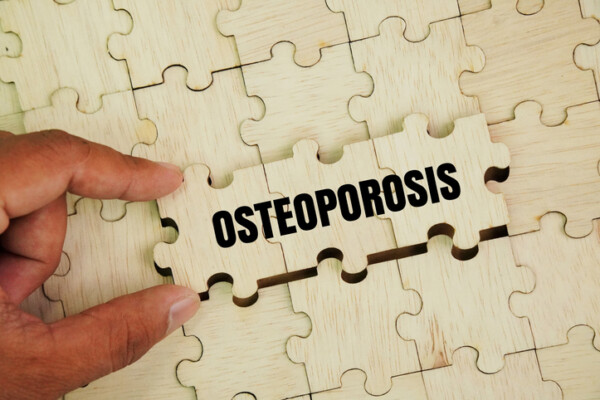
Osteoporosis is a prevalent bone disease that affects bone strength by decreasing bone mass gradually over time. It is known to most commonly affect postmenopausal women. When imagining what healthy bone vs osteoporotic bone looks like, think of a honey comb. A normal healthy bone has a stable honey comb structure, whereas osteoporotic bone has an enlarged honey comb structure with many of the honey comb walls weakening or breaking. This creates bones that are increasingly more fragile leading to a higher tendency to cause fractures in the affected areas.
How to Determine if You Have Osteoporosis
Osteoporosis is commonly identified using a dual-energy x-ray absorptiometry scan or DXA scan for short. This is a low level x-ray that scans the skeleton to look for areas of decreased bone mineral density. Following a DXA your doctor will compare your results to the average of people your age, sex and race.
Risk Factors for Osteporosis
1) Sex – women are more likely to develop osteoporosis
2) Age – increased age has a greater risk
3) Race – white or Asian decent have a greater risk
4) Family history – parents or siblings who have osteoporosis put you at a greater risk
5) Body frame size – people with small body frames have a greater risk
How Exercise Impacts Bone Mass
The use of exercise has been proven to be one of the most effective ways of improving osteoporosis. Exercising, such as strength training and weight bearing aerobic activities, are common ways to increase bone density and decrease the risk of fractures. This phenomenon is called Wolff’s law, which states that loading and mechanical stress to the bone through the use of muscles has a direct and positive effect on bone formation and bone density.
Through the use of exercise, an individual can increase the load on their bones and muscle which in turn causes the body to increase the bone deposition to maintain structural integrity for higher forces that it is now seeing.
Manage Your Osteoporosis with a Customized Exercise Plan
At Capital Area Physical Therapy in Queensbury, Saratoga, Malta and Delmar, our licensed physical therapists can help you manage your osteoporisis safely and effectively by creating a supervised, customized exercise plan designed to protect fragile bones and decrease the risk of fractures, while improving bone density.
To schedule an appointment with our physical therapists in Queensbury, Saratoga Springs, Malta or Delmar, call 518-289-5242.
Citation
1. National Institutes of Health . Osteoporosis and Related Bone Diseases National Resource Center issuing body, National Institute of Arthritis and Musculoskeletal and Skin Diseases issuing body. Osteoporosis. NIH Osteoporosis and Related Bone Diseases National Resource Center, National Institute of Arthritis and Musculoskeletal and Skin Diseases; 2011.
2. Garrick N. Osteoporosis. National Institute of Arthritis and Musculoskeletal and Skin Diseases. Published 2022. https://www.niams.nih.gov/health-topics/osteoporosis/diagnosis-treatment-and-steps-to-take
3. Layne JE, Nelson ME. The effects of progressive resistance training on bone density: a review. Medicine & Science in Sports & Exercise. 1999;31(1):25-30.
https://journals.lww.com/acsm-msse/Fulltext/1999/01000/The_effects_of_progressive_resistance_training_on.6.aspx
4. Mayo Clinic. Osteoporosis. Mayo Clinic. Published February 24, 2024.
https://www.mayoclinic.org/diseases-conditions/osteoporosis/symptoms-causes/syc-20351968