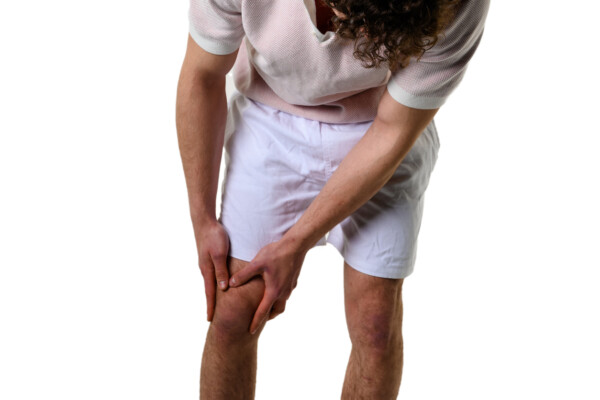
The patella, commonly known as your kneecap, sits within a bony groove of the femur, known as the trochlear groove. It is held in place by supporting structures, like the medial patellar femoral ligament (MPFL), which keeps the patella from laterally slipping out of its groove. Patellar dislocation can occur when excessive stress or trauma to the ligament disrupts the stability of the joint. These injuries can occur atraumatically from rapid directional changes, or from traumatic force to the medial side of the knee.
Why are Younger Athletes at Risk for Patellar Dislocation?
Younger athletes are highly susceptible to patellar dislocations primarily due to anatomical predispositions, generalized joint hypermobility, and the sudden pivoting and twisting motions common in youth sports. This demographic, particularly adolescents ages 10 to 17, is uniquely at risk because their bones and growth plates are still maturing
Anatomical Factors
- Shallow trochlear groove
- MPFL laxity
- Patella Alta (high riding patella)
- Increased quad angle
Lifestyle Factors
- Cutting/Pivoting sports
- Contact sports
- Gymnastics
Why is Physical Therapy for Patellar Dislocation Critical?
Patellar dislocations can cause damage to the MPFL, which reduces the integrity of the structure and increases the risk of future instability and recurrent dislocations that may ultimately require surgery.
Physical therapy is imperative to strengthen the supporting structures that aid in the alignment and tracking of the patella, as well as correcting movement patterns, to increase stability in the knee and prevent recurrent dislocations.
Physical Therapy for Patellar Dislocation in Saratoga, Queensbury & Malta
While not every dislocation can be prevented, physical therapy can help reduce the risk for young athletes. In circumstances where surgery is not indicated, early and targeted interventions can help restore stability, improve confidence, and guide a safe return back to sports.
To schedule a physical therapy evaluation for patellar dislocation in Queensbury, Saratoga Springs, Malta or Delmar, call Capital Area Physical Therapy at (518) 289-5242.